Posts

Republican cuts would cost 700,000 jobs

Image
In the March 1, 2009 article " Republican cuts would cost 700,000 jobs: Report ," Zachary Roth reports that Mark Zandi, a prominent economic forecaster, suggests that the budget cuts proposed by Republicans will slow economic growth and reduce the number of jobs. The logic is that a primary determinant of the number of jobs is the overall demand for newly produced goods and services, which economists refer to as aggregate demand (AD). And a key source of demand, especially in economic downturns and their recoveries, is government purchases. Less government spending translates into less aggregate demand and fewer jobs. According to Roth: A new report by a leading economic forecaster finds that budget cuts passed by the House of Representatives would cost 700,000 jobs over the next two years if enacted. "The House Republicans' proposal would reduce 2011 real GDP growth by 0.5% and 2012 growth by 0.2%," according to the study, by Moody's Analytics chief econ...

Charts reveal shocking income inequality

Image
"Some new data crunches show how the gap between rich and poor has widened into a chasm." In the February 23, 2011 Yahoo! article, "Separate but unequal: Charts show growing rich-poor gap," Zachary Roth summarizes the Mother Jones article," It's the Inequality, Stupid " that appears in its March/April 2011 issue: The Great Recession and the slump that followed have triggered a jobs crisis that's been making headlines since before President Obama was in office, and that will likely be with us for years. But the American economy is also plagued by a less-noted, but just as serious, problem: Simply put, over the last 30 years, the gap between rich and poor has widened into a chasm. Gradual developments like this don't typically lend themselves to news coverage. But Mother Jones magazine has crunched the data on inequality, and put together a group of stunning new charts. Taken together, they offer a dramatic visual illustration of who's doi...

Winner Take All Politics: How Washington Made the Rich Richer – and Turned it s Back on the Middle Class.

Winner Take All Politics: How Washington Made the Rich Richer – and Turned it s Back on the Middle Class - by Jacob S. Hacker From the publisher's website : Description A groundbreaking work that identifies the real culprit behind one of the great economic crimes of our time— the growing inequality of incomes between the vast majority of Americans and the richest of the rich. We all know that the very rich have gotten a lot richer these past few decades while most Americans haven't. In fact, the exorbitantly paid have continued to thrive during the current economic crisis, even as the rest of Americans have continued to fall behind. Why do the "haveit- alls" have so much more? And how have they managed to restructure the economy to reap the lion's share of the gains and shift the costs of their new economic playground downward, tearing new holes in the safety net and saddling all of us with increased debt and risk? Lots of so-called experts claim to have solved ...

Infographic: Visualizing the National Debt

Image
Infographic Source: National Debt LifesLittleMysteries.com Click the image above to see it completely.

Give It Back for Jobs

Image
The "Give It Back for Jobs" website ( http://giveitbackforjobs.org/ ) encourages people to donate to charity the amount of money they will save by the extension of the Bush tax cuts for 2011 and 2012. According to the website: Calculate, Pledge, and Donate Your Tax Cut Americans who've benefited from the extension of the Bush tax cuts should give what they can afford - in large amounts or small - back to the public, by supporting organizations that promote fairness and economic growth. The government has, by extending the cuts, deprived itself of the resources required to support the policies that will secure a vibrant middle class. But joint action by visitors to this site will begin to replicate good government policy, outside the government and free from the grip of obstructionists within it.

Beware of Politicians Who Do Not Understand Economics

Image
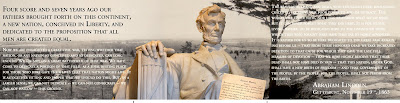
The following quotation is attributed to Abraham Lincoln in the 1912 three-volume publication Industrial Development of Nations by George Boughton Curtiss. The story is also recounted in the book Free Trade, the Tariff and Reciprocity by Frank William Taussig. “I do not know much about the tariff, but I know this much, when we buy manufactured goods abroad, we get the goods and the foreigner gets the money. When we buy manufactured goods at home, we get both the goods and the money.” The quotation is a good example of a passage that sounds persuasive in a political speech, but has no merit when subjected to scrutiny and the application of basic economic principles. To see the fallacy of the protectionist sentiment, use the same logic on a personal level: When I buy food and clothes from stores, I get the food and clothes and the store owners get the money. When I grow my own food and make my own clothes, I get the food and clothes and get to keep my money. It is essentially an...

Bernanke's Monetary Policy: Why a Little Inflation is Good

In the November 12, 2010 TIME magazine article " Bernanke's Bum Rap: What's Wrong with a Little Inflation? ," Michael Grunwald provides a defense for Fed Chairman Ben Bernanke's monetary policy.